You can't script authentic. You build a room for it.
A few weeks ago I was cleaning up after a shoot, talking to my phone about content the way I always do. Halfway through I stopped and thought, why am I dumping this into a chat window when I've got cameras sitting right here.
So I pulled them out and hit record. No plan. No outline. No thumbnail idea.
My entrepreneur friend Tianna came over. We sat down and talked for forty four minutes.
About twenty minutes in, she pitched me a show idea she had never told anyone.
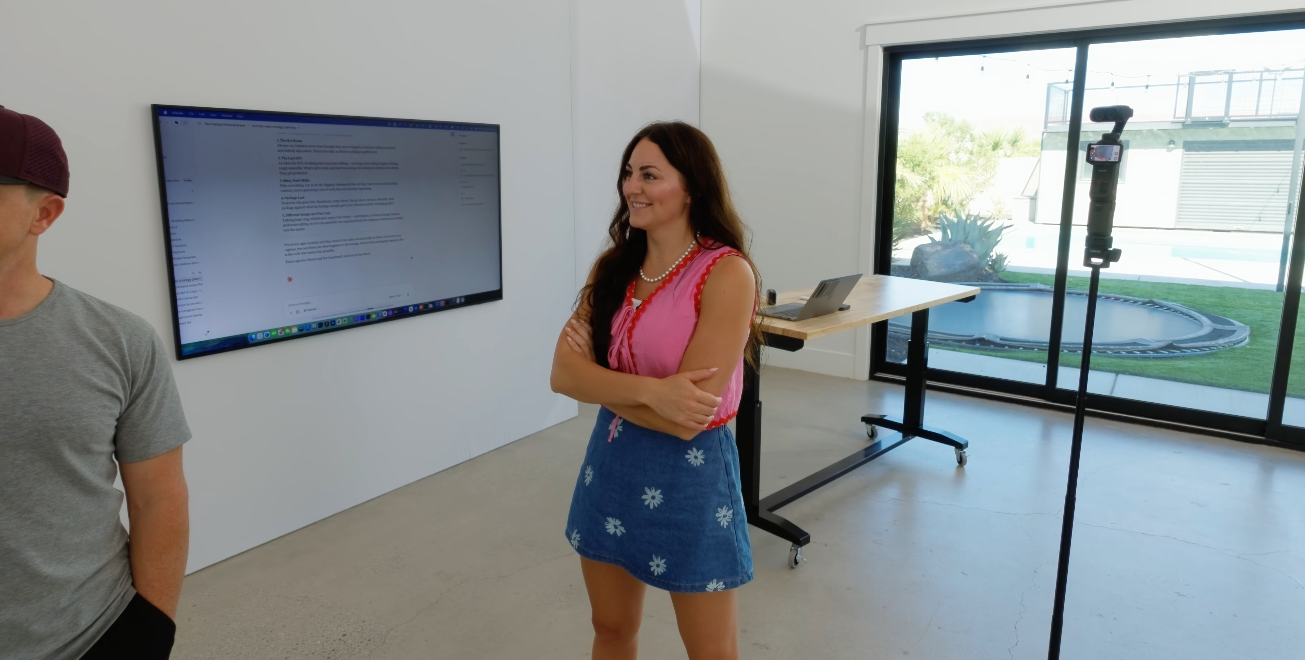
She wants to build a tea lounge. An actual room in her house, set up for tea parties, where people come in and sit and talk with no agenda. Then take the whole set on the road and run it in places it has no business being, like the truck shop that happens to be one of her clients.
Fully formed idea. Delivered perfectly. First take.
Here's what she said about it thirty seconds later:
"When I'm sharing this idea, I would have never been able to spit that out just holding my phone. I probably would have reset that 50,000 times. And it wouldn't have been good."
That's the whole thing right there. That's this entire post.
She didn't get better at pitching. She was in a room where pitching wasn't what was happening.
If you'd rather just watch it happen, the full conversation is here. Her pitch starts around 15:00.
The tripod problem
Here's what I keep coming back to after doing this for years.
Every brand I work with wants authentic content. Every single one. And the way we've all historically gone about getting it is completely backwards.
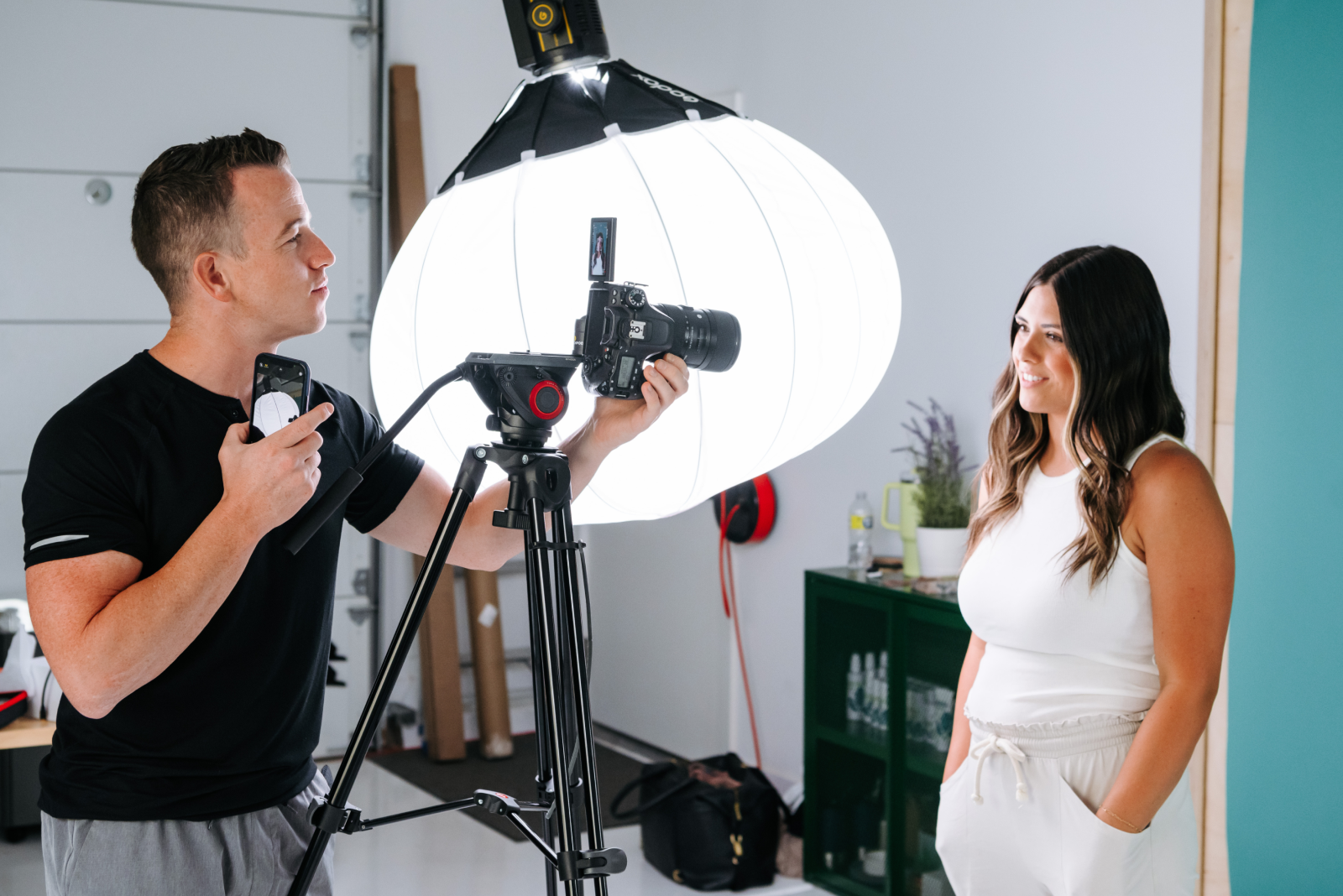
Somebody flies in. We set up a tripod. We put a mic on them. We point a light at their face and we say okay, be yourself.
And now they're in a situation they have never once been in before in their life. They're talking to a lens instead of a person. Every instinct they have is telling them to perform, because everything about the room is telling them this is a performance.
Then we're surprised when it comes out stiff.
You cannot script your way out of that. You can write them a better script and they will read it better. It'll still sound like someone reading.
The problem was never the person. It's the room.
Raw is already table stakes
[IMAGE: card-authenticity-epidemic.jpg]
Alt: Handwritten blue pen on white paper reading "the authenticity epidemic", with a small tripod lying flat above it
Caption: One of the chapter cards from the video.
Right now raw is working and everybody can feel it.
Alex Hormozi is pulling his phone out and posting forty five minute rants, and they're outperforming his polished stuff.
Two things are true about that, and people only ever notice the first one.
He's earned the right. Nobody cares that the frame is crooked or the mic is messed up, because of who he is. So when the takeaway becomes "anybody can do this," that part isn't quite right. He isn't starting where you're starting.
And it's a zig. His audience is used to professional content from him. When a raw one turns up it reads as an outlier, and outliers get attention. Wait, what's he saying, this must be the real thoughts.
Take that same video and drop it on a feed where everything is already raw, and it's just another one.
Jessi Jean is the other end of the same proof. She grew her personal account by hundreds of thousands of followers in a few months doing one thing, showing up and talking to camera every single day. Then she packaged that into a forty day challenge at around $297 and did over seven million dollars in ten weeks.
So this isn't a niche play. It's the thing working at scale right now.
Which is exactly why I don't think it stays an advantage. Raw isn't the edge. Raw is about to be the floor.
When everybody's phone is out and nobody's scripting, being unscripted stops being remarkable. What's left is whether the thing you said unscripted was any good.
Which puts you right back at the room.
What the room actually needs
I've been retrofitting my studio around this idea, and it comes down to four things.
Cameras that are already rolling.
Not cameras we bring out when it's time. Rolling. The whole time, from before they arrive. The difference between someone who knows we're about to start and someone who forgot the cameras are there is the entire difference between good content and slop.
This is the part most people skip because it sounds expensive. It isn't. It's a decision, not a budget.
No rig in their face.
The bigger the setup, the more it announces itself. I'd rather have three small cameras nobody thinks about than one impressive one everybody's aware of.
Tools to think with.
This is the one nobody talks about, and I think it's the biggest.
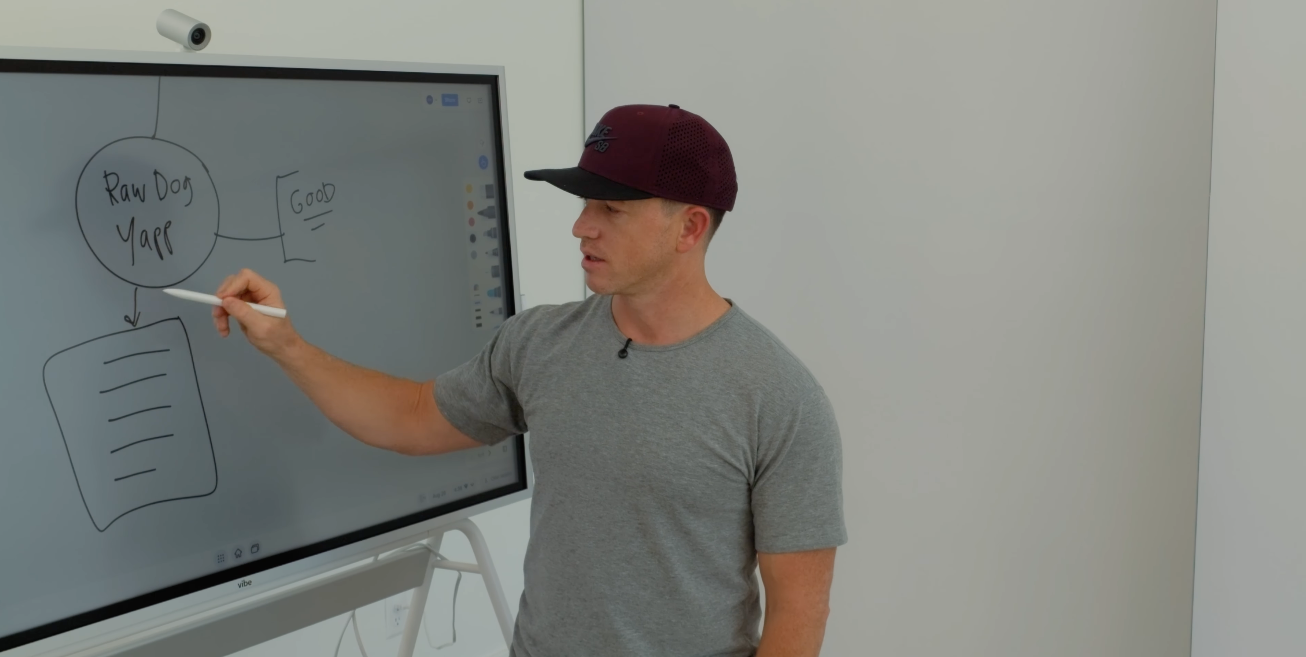
If someone comes in to teach and all they have is a chair, all they can do is talk. Give them a whiteboard and they'll draw the thing.
Give them a physical model of what they're describing and they'll turn it over in their hands and explain it three times better than they could with words.
I have a board in the studio. We literally call it the vibe board. It's one prop out of sixteen or whatever we're up to now.
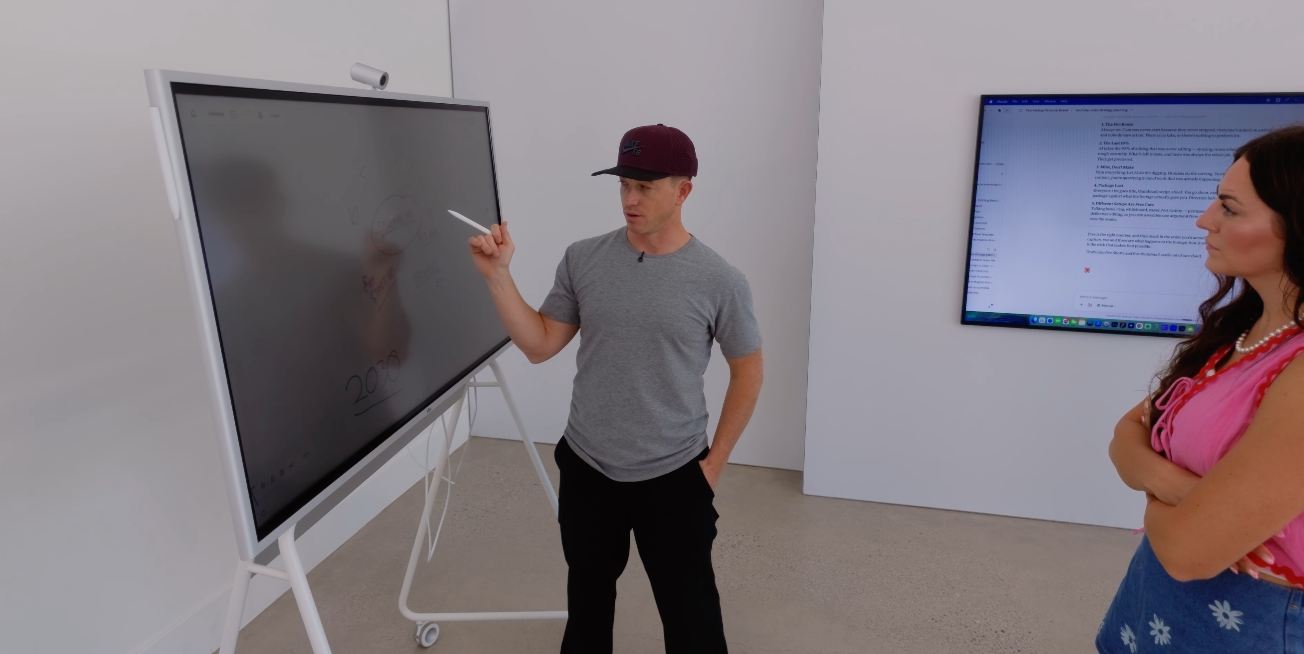
If a brand is coming in to teach the molecular science of the epidermis, we build a model they can teach with in three dimensions. If they're teaching a product, the product is on the table. Overhead writing, live Q&A, something to hold up.
The tools aren't decoration. They're what lets somebody teach as themselves instead of reciting.
No script and no clock.
There's no "we're only running this twice." There's no hitting a script in a specific amount of time.
When there's no pressure to nail it, the conversation just keeps going. And it stays real the entire way.
The eight hour problem
Here's the thing that made all of this impractical until about eighteen months ago.
We have people in the studio for eight hours at a time. The actual filming inside that is maybe three.
And I'd bet money that some of the best information of the day never made it onto that three hour recording. It happened afterwards, when everyone had relaxed and was just talking.
I've watched it happen dozens of times. Somebody on the brand team leans over and says to their educator, no, say it like this, because this is what we actually believe. And they spit out ninety seconds that's better than anything we shot all day.
Every time, I say we should have just filmed that. Let's mic you up right now.
And it's never the same.
So the answer is obvious. Roll the whole eight hours.
The reason nobody does it is also obvious. Now somebody has to go and watch eight hours of footage and find the good parts. That's not a job anyone wants and it's not a job anyone can afford.
That's the part that broke. And that's the part that got fixed.
How I actually find it now
I'm not going to go deep on this here because it's most of the video, but the short version:
I take the raw footage into Premiere and export the transcript as an SRT file. Text with time stamps on it, nothing fancy.
I hand that to Claude, along with a system I've spent months building and correcting. It reads the whole thing and tells me where to cut. Not vaguely. It ranks moments, it tells me what to keep and what to lose and why, and then it writes an XML file.
I drop that XML into Premiere and the cuts are already made.
The forty four minutes with Tianna became twenty eight. The order changed. The line the video opens with came from minute thirty eight.
That's the capture problem and the finding problem solved at the same time. Roll everything, then let the machine read all of it.
The honest version of the 89%
There's a line on screen at the start of that video that says Claude edited 89% of it. I want to be straight about what that number is.
It's my estimate, not a measurement.
What's true: it made the structural calls. The running order, what got cut, where the chapter cards land, where I stop and talk to the camera and what I say when I do.
What's also true: I approved every one of them, I threw some out, and I shot new material to hold it together.
So the honest version is that it made the calls and I made the last call on all of them.
The other 11% is the part worth talking about.
Everybody has the same tools now
You and I can download the same models. Run the same prompts. Get the same output back. So access isn't the advantage anymore.
Now here's where I'd push back on the version of this you've probably already heard.
People say AI can't know what to keep and what to cut, because that takes taste. I don't think that's true. I think Claude is going to do that for you. On this video it already did.
But two things have to happen first, and both of them are a person.
Somebody has to design the system that makes those cuts.
What I handed my transcript to isn't something you download. It's months of me reading what it gave back and saying no, not that one. That's the setup, not the payoff. You cut that four seconds early. That clip only works if you keep the pause in front of it.
And that system doesn't transfer. What matters in my footage is not what matters in yours.
A skincare founder teaching a protocol, a coach on a podcast, somebody talking to their phone in the car. Different tells, different rhythm, a completely different definition of a good moment. The rules are contextual to the business and to the personality in front of the lens.
Whoever writes those rules is doing creative direction. They're just doing it in a text file instead of a timeline.
Then somebody has to turn the raw cut into the thing people actually watch.
What comes back from all of that is a correct cut. Everything that should be in there, in an order that works, nothing wasted. It's genuinely good.
It still isn't a piece of work.
Music. Pacing. Where to hold and where to move. Letting a silence sit because the silence is the point. Which frame to land a card on. Knowing when to break your own rule because the moment earned it.
The raw cut is the argument. The edit is the art.
So what actually changed
Two years ago my job was two things. Find the moments, then make them good.
The first half is going. Honestly, fine. It was never the part I was best at and it was always the part that ate the week.
What's left is deciding what matters here, teaching that to a machine well enough that it can find it without me, and then making the result worth somebody's twenty eight minutes.
That's more creative direction than I was doing before. Not less.
The full conversation is 28 minutes and it's on YouTube if you want to watch the thing I've been describing actually happen.
Claude edited 89% of this video, but that's not the point